
In our current state, misinformation and disinformation run rampant in our society. The need for fast paced reporting and instant information has caused many situations where media is misreported. Other slower and more methodical ways of spreading false news whether malicious or unintentional degrades the public’s trust in news media. Today, we are going to review two tools that can help us better detect and determine which news/stories are reliable.
News Literacy Project: Rumor Guard Service
The epidemic of inaccurate reporting and the generation of conspiratorial media is nothing new in the realm of media. However, what is new is the pace as which is spreads. Social media platforms, subforums, and online chat rooms are hotbeds for spreading misinformation and disinformation with the potential of reaching a national or even global level. This type of information can reach an outside audience at the speed when compared to how disinformation used to be spread. Consider the cold war as an example. The Soviet Union’s KGB actively engaged in disinformation campaigns against its enemies on a global scale. This often was a long and tedious process which included travel, setting up proxy outlets, producing fake materials, and making up fake sources. Compare that being able to make up a fake story with half the work and a click of a button. If you really wanted to start a disinformation campaign you can probably start it in less than an hour with resources such as artificial intelligence, photoshop, and social media. This is the world we live in today.
It is now in the vested interest of everyone to combat misinformation due to its volatile and polarizing nature that creates division amongst each other. Independent projects such as the News Literacy Project have taken up arms in the battle against “fake news”. These types non-profit and non-partisan organizations have sprouted in order to provide solutions to the growing distrust in media. Tools such as fact checking and educational programs have helped reduce the spread of misinformation. However, some people may believe that the fact checkers don’t do their job properly or further spread misinformation. Rumor Guard was developed by the News Literacy Project “to help us all learn how to recognize misinformation and stop it in its tracks”. This tool helps fact check news material on a more meticulous and in depth scale. Rumor Guard uses a multifaceted approach in order to address all areas and concerns surrounding trending media.
Rumor Guard is built to address multiple areas of concern when it comes to trusting fact checking. The number one advantage the this tool has is that it comes from a non-partisan source the evaluates media fairly. Articles such as “False claims that Biden is secretly flying migrants to U.S. to vote persist online” and “No, Trump didn’t refer to his wife, Melania, as ‘Mercedes” are both stories on different ends of the political spectrum. Rumor Guard uses five factors and specific media verification techniques to help discern the vague and unknown to the clear and known. The five factors are defined by a stories authenticity, source, evidence, context, and reasoning. Under these pillars for defining the validity of a story the verification techniques lay. These techniques help find misinformation, bias, verification, and ect. Put all of these factors together into a well defined articulated summary and information gets a whole lot clearer.


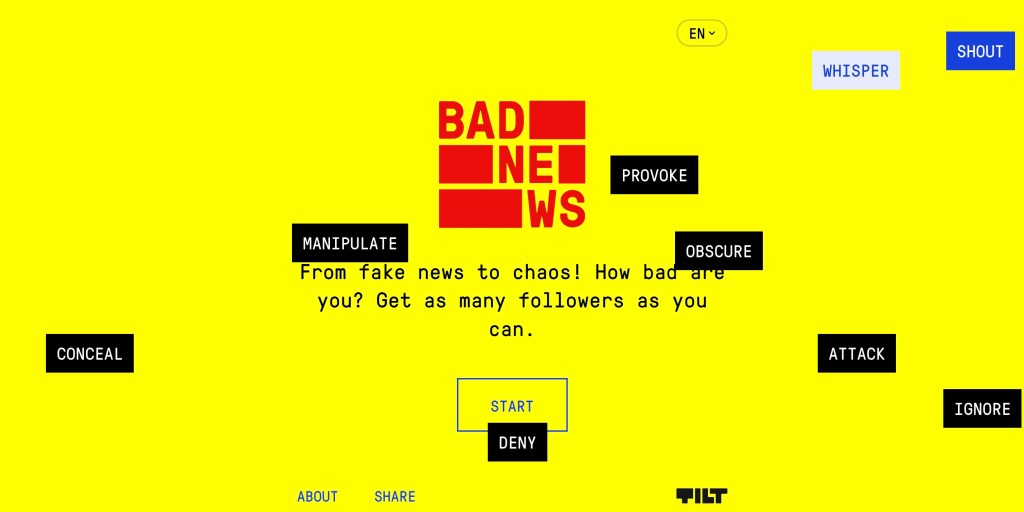
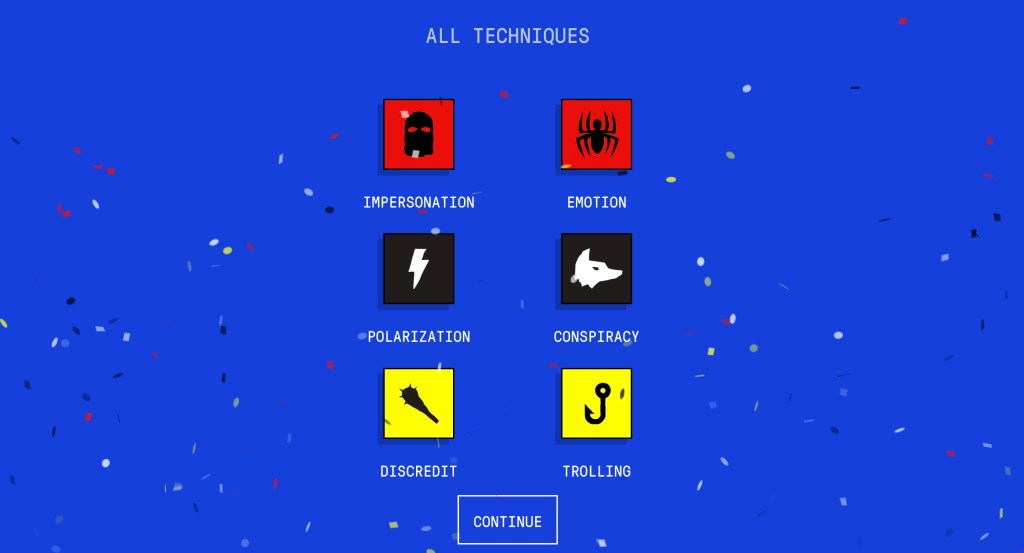
Another tool that can be used to help people discern misinformation and how it works are interactive games. These programs are more used as educational tools rather than an actual video game that is played for fun. The game that I happened to select was Bad News which was based on creating misinformation and disinformation for a higher score. This game was really helpful when it comes to viewing disinformation is created from the perspective of the person creating that type of news. The game follows your progression towards understanding impersonation, emotional manipulation, polarization, conspiracy, discrediting, and trolling. You learn these concepts as the game progresses through interactive decision making based on making the most deceitful content imaginable. You become more polarizing as the game progresses in order to gain the most amount of influence and followers you can. You are allowed to choose the types of content presented and it depicts your followers reactions after you make a decision. This represents real scenarios and behaviors that these types of individuals engage in. For example, in order to maintain credibility you have to attack outlets that are calling you out on your misinformation. You also engage in deception with purchasing bot accounts to spread your message along. There really are no rules when it comes to the spread of disinformation.
 NIck Layman's Blog
Leave a comment